
Stump Grinding in Abilene, TX
Old stumps, fresh stumps and the surface roots that come with them, ground out below grade so you can fill the hole, seed it and mow over it.
Why Bother Grinding the Stump
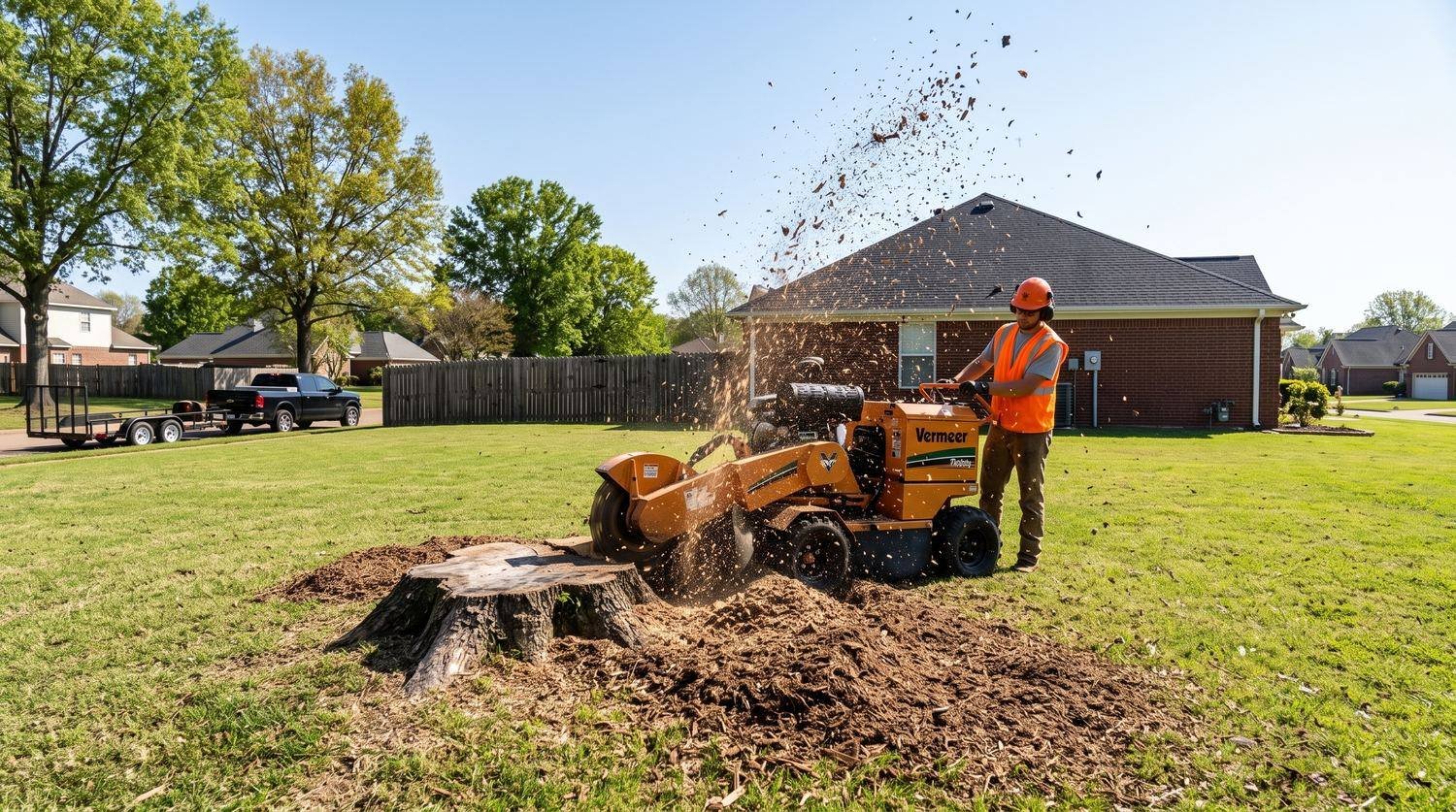
Stump grinding in Abilene, TX is the part people put off, usually because the tree is already down and the stump does not look like a problem yet. Give it a season or two and it generally becomes one.
A grinder is a wheel of carbide teeth that chews the stump into chips, working down and across until the wood is gone and the hole is below the level of the yard. Nothing is dug up, nothing is dragged out, and the machine only needs to reach the stump.
What a stump does if you leave it
- Sprouting. Mesquite, hackberry and chinaberry send up suckers from the stump and roots for years, and mowing them only keeps the cycle going
- Insects. Decaying wood at ground level draws termites, carpenter ants and beetles right up against the house
- Mowing. A hidden stump or root ruins a mower blade, and everyone has to steer around it forever
- Replanting. You cannot put a new tree anywhere near the old root mass until the wood is out of the way
- Tripping. A low stump disappears into Bermuda grass by June, which is how ankles get rolled
Get a Free Stump Grinding Quote
Send a photo with something for scale next to the stump, a tape measure or a shoe, and tell us how we would get a machine to it. That is usually enough for a price.
- Free, no-obligation estimate
- Quotes from an independent local tree service
- Ground below grade, not just shaved flat
- Grindings raked back or hauled off, your call
Your request goes to an independent local tree service, which contacts you with a quote. Big Country Tree Pros does not do the tree work itself.
Grinding or Digging the Stump Out
There are two ways to get rid of a stump, and grinding is the right answer nearly every time.
| Method | What it involves |
|---|---|
| Stump grinding | The stump is cut into chips in place, down past grade. Fast, low impact on the surrounding lawn, and no crater to fill with imported dirt |
| Full excavation | An excavator pulls the stump and root plate out whole. It leaves a large hole and torn ground, it costs more, and it is worth it only when a foundation, pool or slab is going in over the spot |
The tradeoff is that grinding leaves the deeper root system in the ground. Those roots decay quietly over the following years and cause no trouble. Nothing regrows once the stump and the root flare are ground out.
How Deep Grinding Goes
Standard grinding takes the stump roughly four to ten inches below grade. That is enough to get the wood below mowing height, kill any chance of sprouting, and give you enough depth to put soil and grass back over the top.
Deeper is sometimes the right call. If you plan to replant a tree in the same spot, we go further down and wider, usually a foot or more, so the new root ball is not sitting on a mat of old wood. Fence posts, footings and irrigation trenches over the old stump also call for extra depth. Tell us up front what is going in over the top, since going deeper on the first pass costs far less than coming back for it.
Root flare and surface roots
The stump itself is only the visible part. Where the trunk widens at the base and runs out into the ground, those flare roots often extend several feet and sit an inch or two under the grass. Live oak, pecan and cedar elm are notorious for it in older Abilene yards. Grinding the flare and any surface roots that cross the lawn adds time, so it is quoted as its own item rather than assumed either way.
What Gets Left Behind
Grinding produces a pile of grindings, meaning wood chips mixed with soil. There is always more material than people expect, since ground wood takes up roughly twice the space the solid stump did. What happens to that pile is your call.
- Backfill the hole. The cheapest option. We rake the grindings back in and mound them a few inches high, since the pile settles as the wood breaks down
- Mulch elsewhere. Fine for paths and fence lines. Keep it out of vegetable beds, since decomposing wood pulls nitrogen from the soil
- Haul off. We load out the grindings and leave the hole ready for clean fill, quoted separately because it is a truckload of material
If you want grass over the spot, do not seed into the chips. Rake most of them out, fill with topsoil, tamp it, then seed or sod, and plan to top the area off once more when it settles. Bermuda takes over a filled stump hole fast in an Abilene summer, provided the fill is real dirt.
Access, Gates and Rocky Ground
Walk behind machines fit through a standard three foot gate. Anything narrower and a backyard stump may need a smaller unit or the gate panel pulled and reset. Bigger tow behind grinders work faster but need real access, so open lots around Buffalo Gap, Clyde or Merkel often go quicker than a tight Abilene backyard.
Ground conditions matter here more than most places. Caliche, limestone and the rock in our clay sit right around the root plate, and rock is hard on grinder teeth. A stump that grew through rocky fill grinds slower than the same stump in loose soil, and an honest quote accounts for that.
What Affects the Price of Stump Grinding
| Factor | Why it moves the price |
|---|---|
| Stump diameter | Measured at the widest point of the stump at ground level, not the trunk higher up. A flared base is a bigger job than the trunk suggests |
| Height above grade | A stump cut off at knee height means grinding everything above the ground first |
| Depth required | Standard below grade work costs less than the deeper grind needed for replanting or a footing |
| Root flare and surface roots | Chasing roots across the lawn is extra time on the machine |
| Rocky soil | Rock in the root plate slows the grind and wears teeth |
| Access | Gate width, slope and distance from the truck all change how fast we work |
| Number of stumps | Several in one visit cost less each than the same stumps on separate trips |
Grind it during the removal
The cheapest time to grind a stump is while the crew and equipment are already in the yard for the tree removal, since a return trip means mobilizing again for one stump. We also grind stumps somebody else left behind, including old ones that have sat for years. Weathered stumps usually grind easily, because the wood has already gone soft.
Clearing several stumps out of a fence line or an old mesquite thicket? Send a photo of the whole row. Common questions are answered on the FAQ page, or just send us the details.
Stump Grinding Questions
How deep do you grind?
Usually four to ten inches below grade, which is enough to fill and grow grass over. If you are replanting a tree in the same hole or setting a post there, tell us and we grind deeper and wider.
Do the roots keep growing after grinding?
No. Once the stump and root flare are ground out there is no growing point left, so nothing sprouts. The deeper roots stay in the ground and decay over the next several years.
What do you do with the wood chips?
Your choice. Most people have us rake them back into the hole and mound them, since the pile settles. We can also leave them for mulch or haul them off, which is quoted separately.
Will the grinder fit through my gate?
Our walk behind machine fits a standard three foot gate. If yours is narrower we can often pull a gate panel and reset it, or work with a smaller unit. Send a photo of the gate with your quote request.
Do I need to call 811 before you come?
Yes, and it is free. Utilities mark public gas, electric, water and communications lines within a couple of business days. Private lines like sprinklers, low voltage lighting and invisible fence are not marked, so point those out to us.
Can I plant a new tree in the same spot?
Yes, if we grind deep enough and you replace the grindings with real topsoil. Wood chips left in the planting hole rob nitrogen and settle. Give it a season if you can, or shift the new tree a few feet over.
Ready for a free quote?
Takes about a minute. No obligation, no pressure.