
Where We Work in the Big Country
Abilene is home base and we cover the towns around it. No travel premium, and no minimum job size that rules out a single tree.
Abilene and the Towns Around It
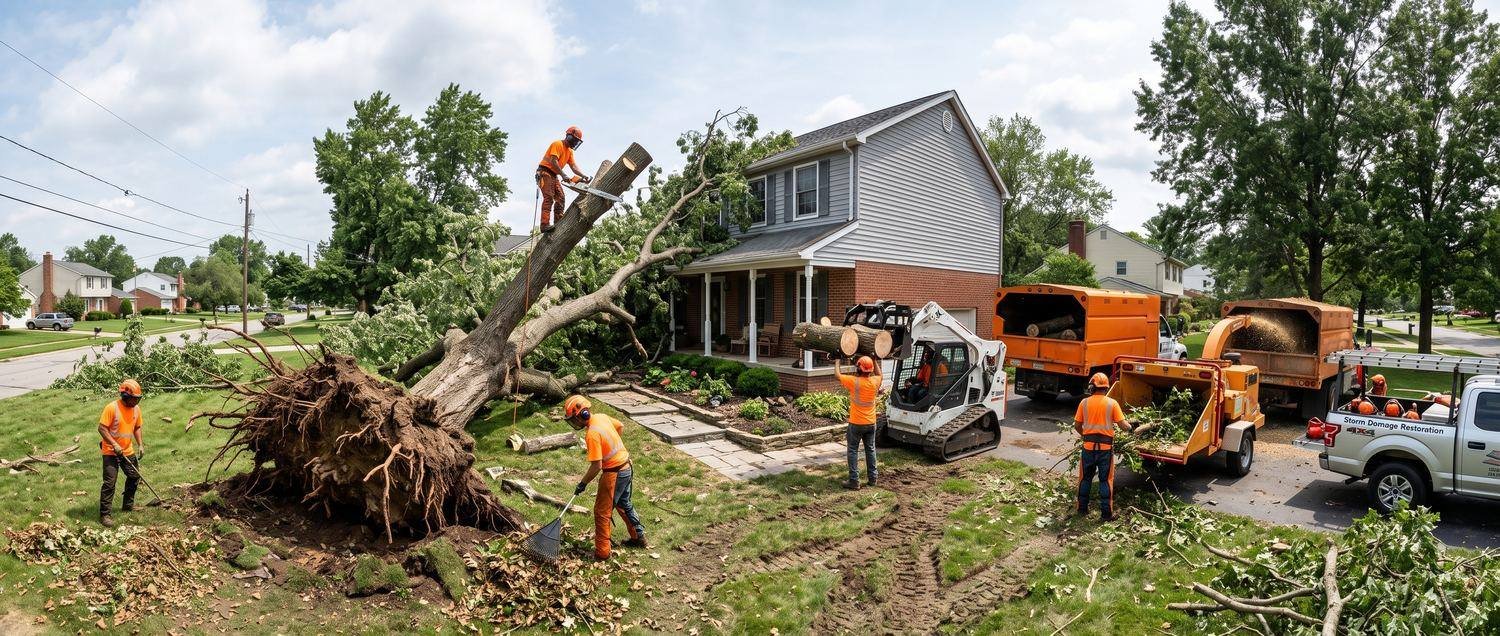
The Big Country covers a lot of ground and the tree work changes as you drive across it. A live oak over a roofline in a south Abilene subdivision and a dead windbreak row on farm ground west of Merkel are both tree jobs, and almost nothing about them is the same. Different equipment, different method, different price.
Below is each town we work in and what the trees are doing there. If you are somewhere nearby that is not on the list, ask anyway.
Free Quotes Across the Big Country
Tell us where you are and what the tree is doing. A photo from across the yard answers most of our questions. We come back with a clear price and no pressure.
- Free, no-obligation estimate
- No travel charge inside our service area
- Ask for chipping and haul-away in your quote
- Single trees are welcome, no minimum job
Your request goes to an independent local tree service, which contacts you with a quote. Big Country Tree Pros does not do the tree work itself.
What Makes West Texas Trees Their Own Problem
Abilene sits near the dry edge of where most shade trees can comfortably grow. Rain arrives in a few heavy events rather than steadily, and much of the region is shallow clay and caliche sitting on limestone. Trees here grow slower, store less reserve and take far longer to close a wound than the same species somewhere wetter. That one fact should shape how anyone prunes in the Big Country, and the right approach is conservative cuts rather than heavy ones.
The species mix follows from the climate. Live oak, Texas red oak, bur oak, cedar elm and pecan hold up here over decades. Mesquite survives what kills everything else, which is why it keeps taking pasture back from the fence line inward. Trouble comes from the fast growers planted for quick shade. Arizona ash hollows out and sheds limbs by its third decade. Bradford pear carries a flaw at the main union and eventually finds it.
Drought stress shows up late
Most of the dead trees we get asked about did not die the week the owner noticed. They were injured by a dry stretch a year or two earlier and have been running down reserves since. Leaves coloring in August instead of late fall, crisp brown margins on green leaves, thinning at the top while lower limbs look fine, and dieback working inward from the branch tips are all the same signal. Watering helps more than people expect, and most do it wrong. A lawn sprinkler wets the top inch of soil and does almost nothing for a mature tree. A slow soak at the drip line, deep enough to wet the ground a foot down, then nothing for two or three weeks, is what works.
Oak wilt and wind
Red oaks and live oaks are best pruned from midwinter into early spring. Fresh cuts in warm weather attract the beetles that carry oak wilt between trees, and live oaks make it worse by growing in connected root systems, so a motte of them can share the disease underground. Hazardous limbs that cannot wait get their cuts sealed the same day.
Wind out here is a working condition, not an occasional event. It shapes the trees, which is why so many old elms in the smaller towns carry a one sided canopy and lean with the weather. It also decides the schedule.
Towns We Cover
Wylie, south Abilene
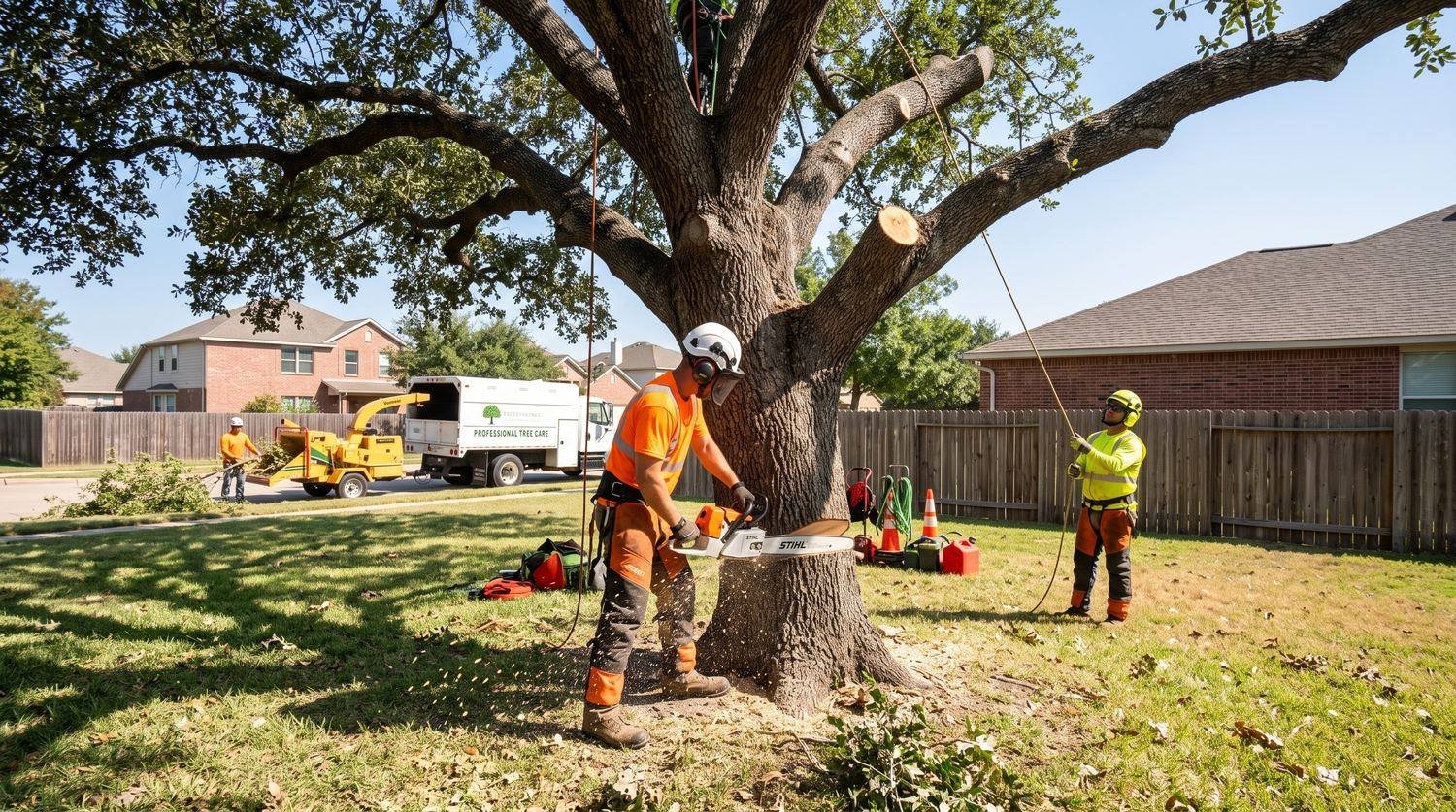
Wylie is where the trees finally grew up. These are newer neighborhoods, and the live oaks and Texas red oaks that went in when the houses were built are full size now, sitting in yards that were laid out when each one was a stick with a hose ring around it. The work here is mostly clearance and correction. Canopies raised off roofs and gutters, leaders growing into an eave, limbs cut back off a neighbor fence or above a pool, and the occasional Bradford pear that split at the union. Access drives the price on these lots, because side yards are narrow and a six foot gate may or may not take a chipper feed. See tree service in Wylie.
Tye
Tye is a small town west of Abilene with older housing and trees that have been there a long time. Most were never pruned for structure and never needed to be, right up until a limb came down on a carport. The other fact of life is exposure. There is open country on the west side and little between Tye and the horizon to slow anything down, so trees here lean, carry one sided canopies and shed limbs off the leeward side. Big elms and hackberries over driveways, pecans needing deadwood pulled, and drought killed trees that never came back are the usual jobs. Base moves and rentals also mean a lot of work on a fixed date. See tree service in Tye.
Clyde
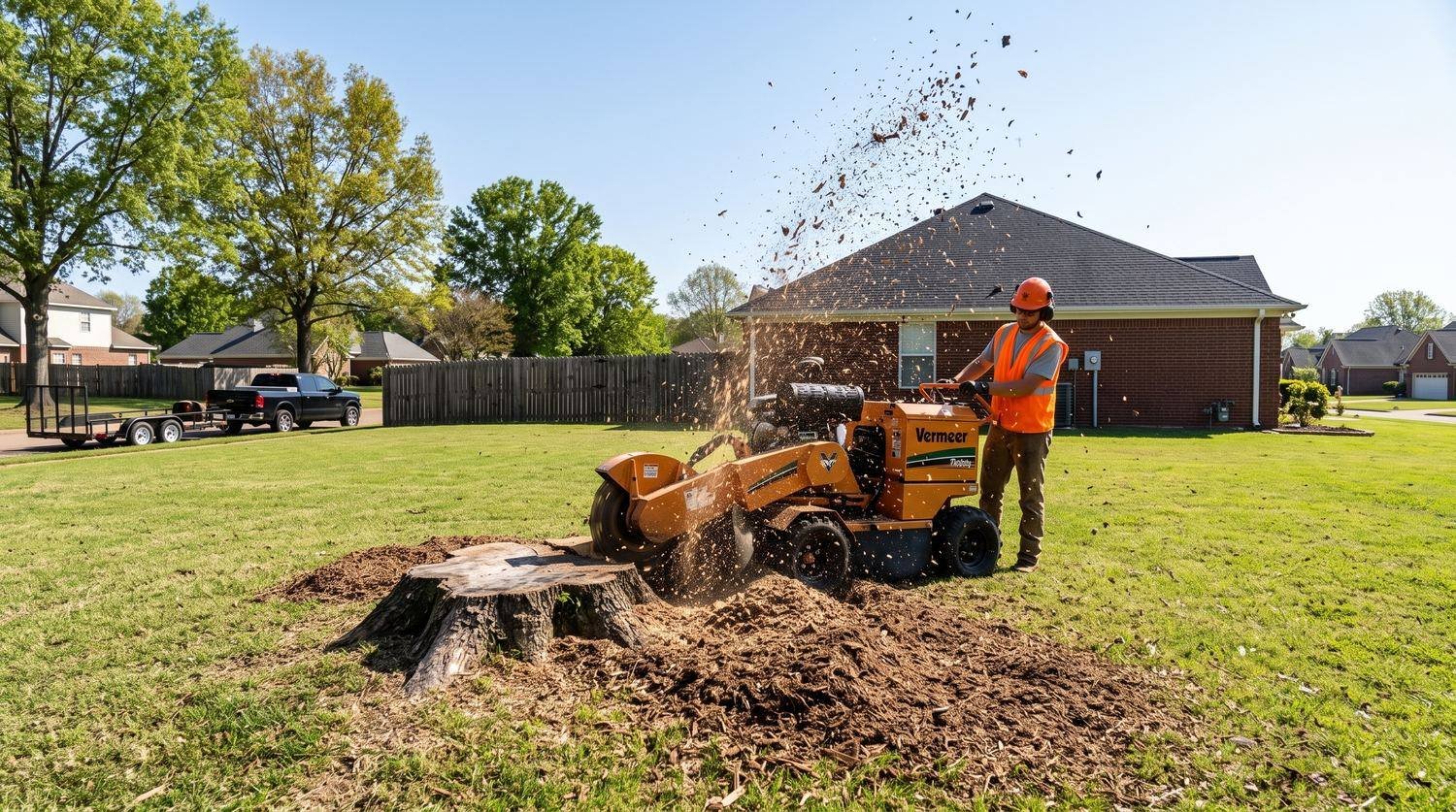
Clyde sits on I-20 east of Abilene in Callahan County, and the work there splits cleanly in two. In the older parts of town you have real shade trees, pecans dropping on the same driveway for forty years, live oak and red oak in the front yards, cedar elm and hackberry filling in wherever nobody stopped them. That work is mostly maintenance, with removals driven by decay or drought. Past the edge of town, on places sitting on a few acres, the question is brush rather than one tree. Mesquite works in from the fence line and cedar comes up wherever a mower has not been, and clearing only holds if the stumps are ground below the bud collar. See tree service in Clyde.
Baird
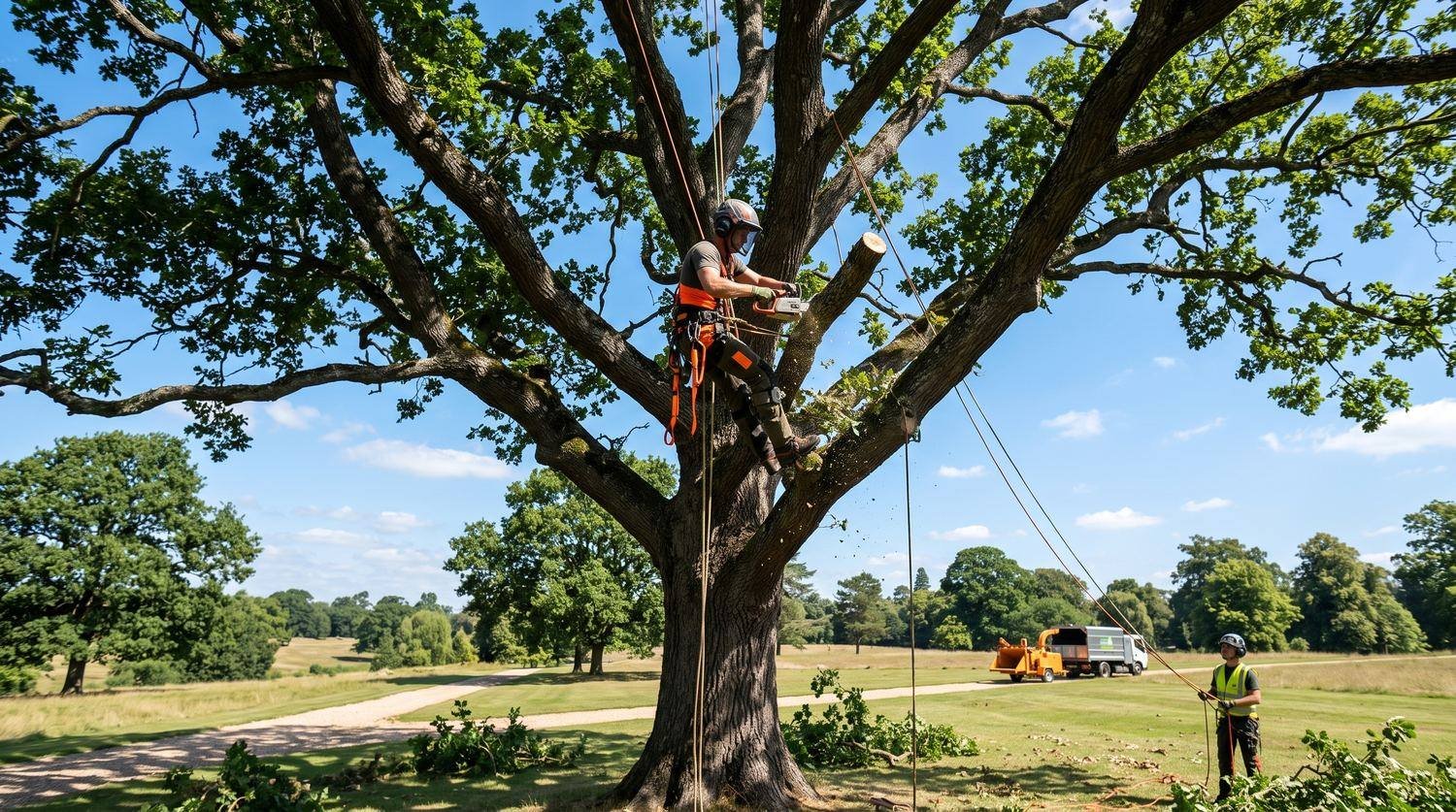
Baird is the Callahan County seat, and tree work there is mostly a conversation about age. The housing stock goes back a long way and so do the trees around it. Some are worth real money to keep. Some are past the point where money helps. A tree that has stood for eighty or a hundred years has usually survived several droughts, a hard freeze or two and some trenching it never recovered from, and the damage is the kind you have to get close to see. Access is half the job here, since narrow drives, outbuildings and low service drops mean climbing and rigging rather than a bucket truck. See tree service in Baird.
Buffalo Gap
Buffalo Gap sits at the gap in the Callahan Divide, and the country around it has better trees than most of Taylor County because the draws and creek bottoms hold water. That means big native live oaks, pecans where there is moisture, and cedar elm underneath. Those are the trees people care most about, so the first conversation on an acreage property is what stays, not what goes. Beyond that it is clearing, since cedar drinks heavily and shades out grass while mesquite thickens every year it is left alone. The mistake to avoid is clearing with a wide brush. A live oak that size is not something you replant. See tree service in Buffalo Gap.
Merkel
Merkel is farm country at the flatter western end of Taylor County, and most of the trees there did not arrive by accident. Somebody planted them, either around a house for shade or in a row to break the wind. Those windbreaks mostly went in as Siberian elm, Arizona ash, cottonwood and cedar, all fast growers with short lives, so the rows are now full of gaps and dead standing trunks. The upside for anyone paying the bill is that open ground is the cheapest place to take a tree down. Nothing under it but grass means no climbing and no rigging. See tree service in Merkel.
Travel, Scheduling and How We Cover the Region
Getting a truck, a chipper and a grinder to a property is a real part of what any tree job costs, which is why some companies add a travel charge outside the city. We do not, inside the area listed above. Instead we group work by direction, so jobs toward Clyde and Baird tend to land on the same run, and Tye and Merkel on another.
How fast a standard job gets quoted and scheduled depends on the local tree service’s calendar and the weather. Anything blocking access or resting on a structure moves ahead of routine work. Wind is the one thing that reliably moves a calendar.
You do not need to be home for a quote as long as we can reach the tree, and for most jobs you do not need to be there for the work either. Written quotes for a landlord or property manager to approve are no problem. All four tree services are available everywhere on this page, and the contact page has the quote form.
Service Area Questions
Do you charge extra to come out to the smaller towns?
No. Wylie, Tye, Clyde, Baird, Buffalo Gap and Merkel are all inside our normal service area, with no travel premium and no minimum job size. A single tree is a job we will quote.
My town is not on your list. Will you still come?
Probably. We work Taylor County and the Callahan County side of the I-20 corridor routinely, and we go further for larger jobs. Send the quote form with your location and we will tell you straight whether we can cover it.
Does the price change depending on which town I am in?
Not because of the town. It changes because of the tree and what is under it. The same tree is far cheaper on open ground west of Merkel than it is ten feet from a roofline in Wylie, because one gets felled whole and the other comes apart in roped sections.
Can you get equipment onto a rural property or a caliche drive?
Usually yes, and we ask about it before quoting. Long drives, soft ground after rain, cattle guards and gate widths all affect what we can bring in and how the work gets staged. Tell us what the approach looks like when you send the details.
How fast can you get out to an outlying town after a storm?
Anything blocking a driveway or resting on a structure gets priority regardless of which town it is in. Widespread damage naturally stretches the schedule. Photograph everything before a cut is made, and stay clear of any tree touching a power line until the utility clears it.
Ready for a free quote?
Takes about a minute. No obligation, no pressure.