
Tree Services in Abilene and the Big Country
Four services, one crew, and a straight answer about which one your tree actually needs. Every quote includes chipping, haul-away and a clean yard when the crew leaves.
Four Services That Cover Almost Every Tree Problem
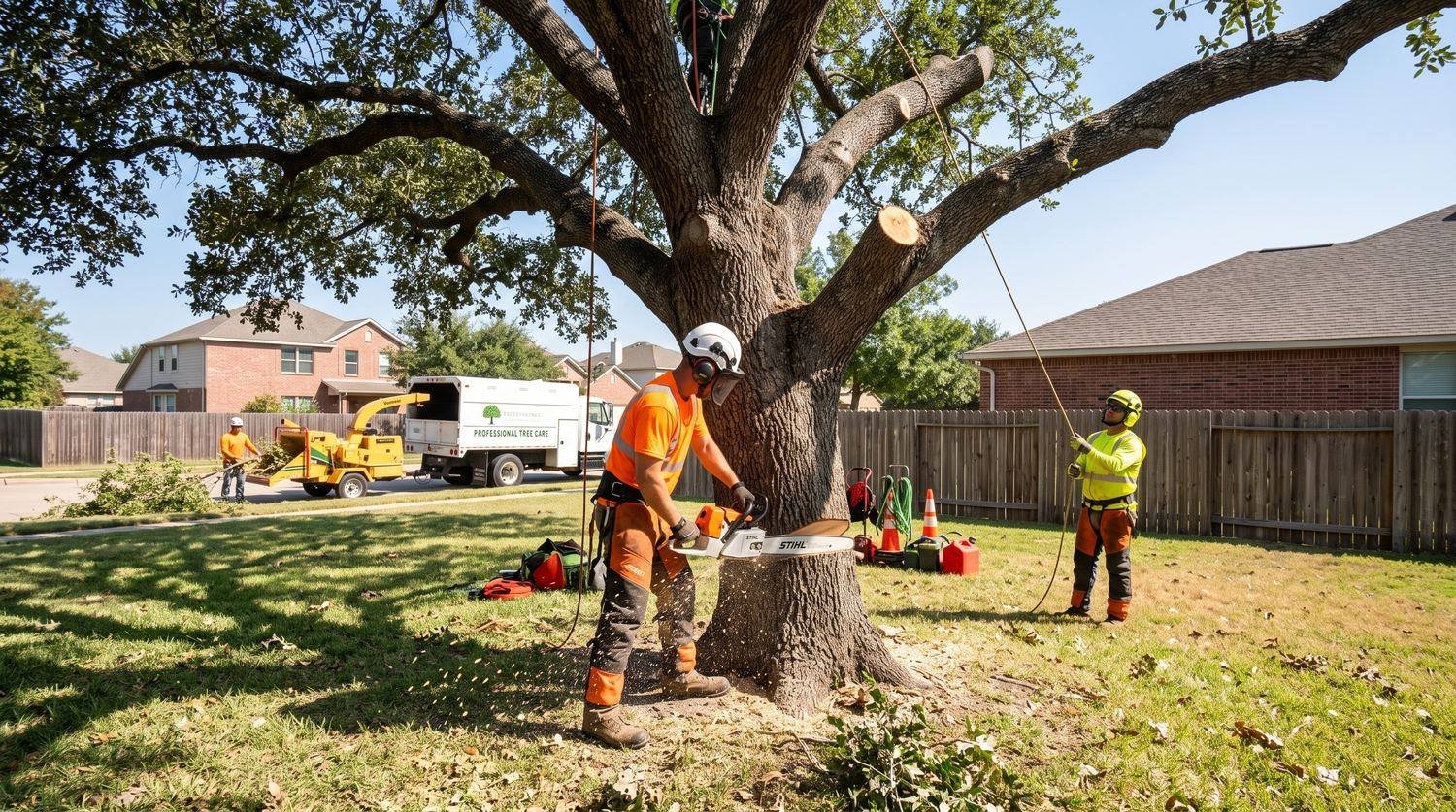
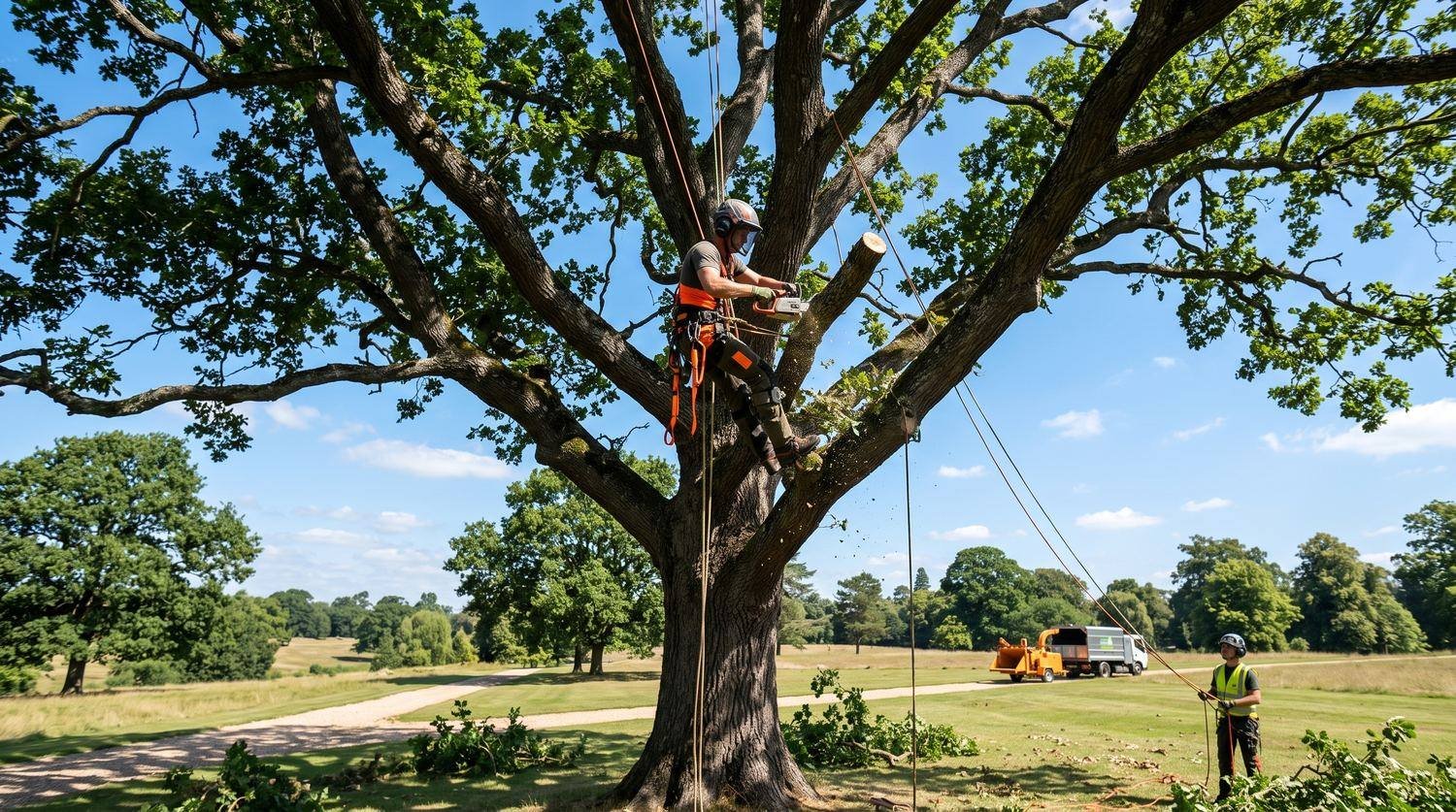
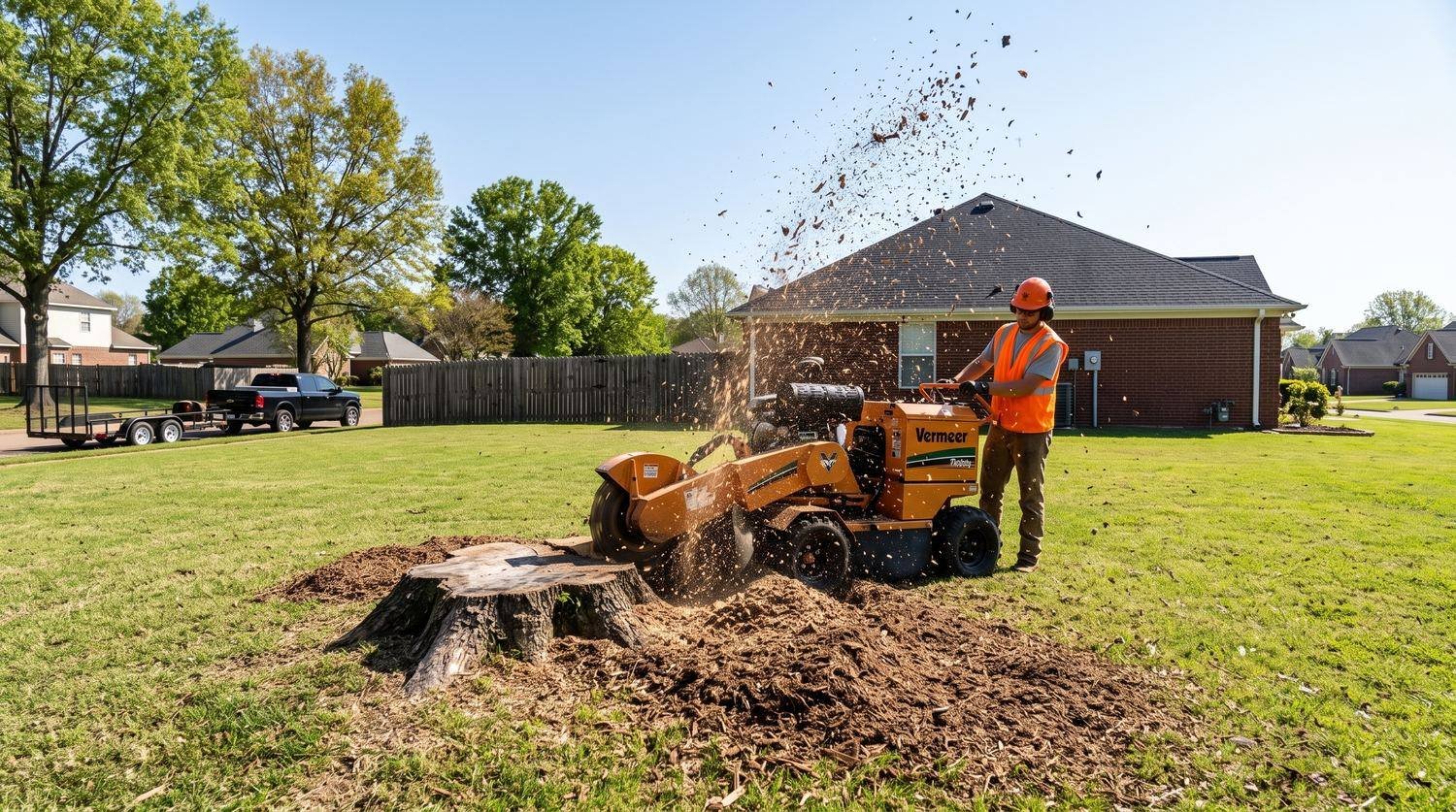
Most of the tree work in Abilene comes down to four things. Taking a tree out, pruning one so it can stay, grinding a stump that is already there, and cleaning up after weather. Everything else is a version of one of those.
The part worth getting right is which one you are looking at. People often ask for a removal when the tree needs a trim. Below is what each service covers, and how to tell them apart before you spend money on the wrong one.
How to tell which service you need
Walk out and look at the tree from far enough back to see the whole canopy against the sky. Then work down this list.
- Limbs on the roof, over the drive, or dead tips in an otherwise green canopy. That is trimming. The tree is sound and in the wrong shape.
- More than about half the canopy dead, mushrooms or hard conks at the base, a cavity in the trunk, or a fresh lean with soil lifting on the far side. That is removal. The structure has failed and pruning does not put it back.
- The tree is already gone and there is a stump sprouting, in the mow path, or in the way of a fence or a slab. That is stump grinding.
- Something is down, hanging, blocking a gate or resting on a structure after wind or hail. That is storm cleanup, and it moves ahead of routine work.
Get a Free Quote on Any of These
Tell us what the tree is doing and where it sits on the lot. A photo from across the yard answers most of our questions. We come back with a clear price and no pressure.
- Free, no-obligation estimate
- Quotes from an independent local tree service
- Ask for chipping and haul-away in your quote
- We will say so if a trim beats a removal
Your request goes to an independent local tree service, which contacts you with a quote. Big Country Tree Pros does not do the tree work itself.
The Four Services in Detail
Tree removal
Removal is the answer when a tree can no longer safely stand where it is. Around here that usually means drought killed hackberry and mesquite that never leafed back out, a red oak with a crack down the main union, an aging pecan shedding heavy limbs over a driveway, or a Bradford pear that split at the crotch. How the tree comes down depends entirely on what sits underneath it. On open ground it can be notched and felled whole, which is the fast and inexpensive version. Ten feet from a roofline or under a service drop, nothing gets felled at all. The tree comes apart from the top down, limbs roped and lowered rather than dropped, and the trunk blocked out in pieces sized to land where they should. Dead trees are the harder job, not the easier one, because brittle wood snaps instead of bending. Full detail is on the tree removal page.
Tree trimming and pruning
Trimming keeps a tree out of places it does not belong and keeps the tree itself sound. That means clearance off a roof, a gutter line, a driveway or a gate, deadwood pulled out of the canopy, long horizontal limbs reduced back to a lateral instead of stubbed off, and thinning so wind moves through a tree rather than pushing on it. On younger trees it also means structural pruning, which is small cuts made now on competing leaders and tight unions so they do not become a takedown twenty years from now. Cuts are made at the branch collar where the tree can seal them. We do not top trees. Topping looks tidy for one season, then throws out weak regrowth attached to the outer edge of a stub, and those are the limbs that fail in the next front. See the tree trimming page.
Stump grinding
A grinder is a wheel of carbide teeth that chews a stump into chips, working down and across until the wood is below the level of the yard. Nothing gets dug out and nothing gets dragged across the grass. It is the only thing you can do to a stump that actually finishes the problem. Left alone, a stump sprouts, and mesquite, hackberry and chinaberry keep sending suckers up for years. It stays something you mow around, and over time it becomes a soft, insect friendly spot in the middle of the yard. Grinding below grade lets you rake the hole full of topsoil and put sod, seed or a new tree back. Having it done on the same visit as a removal is cheaper than a separate trip. More on the stump grinding page.
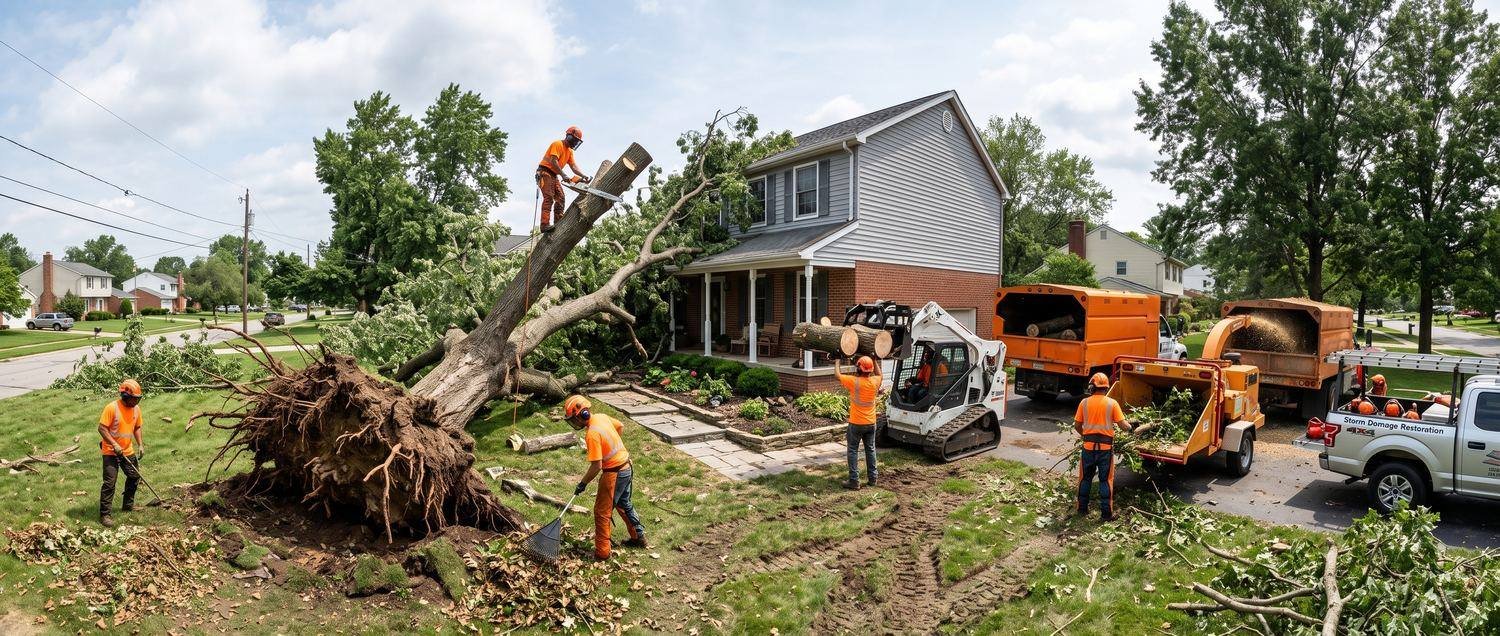
Storm and emergency cleanup
Straight line wind and hail do the same handful of things to trees in the Big Country. A trunk splits at a weak union. A limb tears out and hangs in the canopy where it can drop later. A whole tree lays over across a fence, a drive or a roof. Storm work has a different order of operations than a scheduled job, because the first priority is making the property safe and passable, not producing a tidy landscape. Load comes off in the sequence that keeps the rest of the tree from moving, and hangers get brought down before anyone works underneath. Two things before anyone touches anything. Photograph the damage for your insurer before a single cut. And stay away from any tree touching a power line, including the fence it landed on and the wet ground around it, until the utility clears it. See the storm cleanup page.
Comparing the Four at a Glance
| Service | Typical use case | Typical timeline |
|---|---|---|
| Tree removal | Dead, split, decayed or leaning trees, and healthy trees too close to a structure or line | Half a day to a full day for most single trees. Large or tight access trees can take two |
| Tree trimming | Roof and driveway clearance, deadwood, canopy thinning, structural pruning on young trees | A few hours for one tree, a full day when several are done at once |
| Stump grinding | Stumps from an old removal, sprouting stumps, stumps in the way of a fence or mow line | Under an hour for a small stump, a few hours for a large one with surface roots |
| Storm cleanup | Trees down on structures or fences, limbs across access, hangers left in a canopy | Making it safe comes first and gets priority scheduling. Full cleanup follows |
What Happens on a Job, From Quote to Cleanup
The process is the same whether it is one limb or a full takedown, and there are no surprises built into it.
- You send the details. Fill out the quote form with what the tree is doing and where it sits on the lot. A photo from across the yard, showing the whole canopy and what is under it, answers more than a paragraph of description.
- We give you a real number. Simple jobs get quoted from the photo. Anything that needs walking gets looked at in person for free, and there is no charge for telling you a tree is healthy.
- We agree on scope in writing. Stump grinding, hauling off debris that was already in the yard, and any landscape repair are quoted separately from the tree work, so you can see which is which before anything starts.
- The crew works the plan. What sits under the tree decides the method. If something changes mid job, work stops and we talk to you before it goes further.
- The site gets cleaned. Brush chipped and hauled, trunk wood removed unless you want it kept for firewood, and the drive and street blown clean. Cleanup is in the price, not an add on.
Weather moves schedules more than anything else. Nobody should be rigging a limb over a roof in a hard gust, so a front moves the calendar.
Where These Services Are Available
Abilene is home base and the same four services go out to the towns around it, with no travel premium and no minimum job size that rules out a single tree. That includes Wylie, Tye and Merkel out west, Clyde and Baird along I-20, and Buffalo Gap to the south. Each place has its own tree problems, from suburban live oaks over rooflines to mesquite taking pasture back, and the service areas page covers what the work looks like in each one.
To get started, use the form above or the contact page. A photo and a sentence about the tree is usually all we need.
Specific Trees and Situations
Jobs that come up often enough around Abilene and the Big Country to have a page of their own.
Dead Tree Removal
Standing dead and dying trees near a house, drive or fence. Brittle wood behaves differently on the way down, so these come apart in smaller pieces.
Mesquite Removal
Yard mesquites and acreage clearing. Cutting alone leaves the bud zone at the base, which is why so many come back thicker than before.
Cedar Removal
Juniper in multi stemmed clumps, on fence lines or in a yard. Dense, resinous and bulkier to haul than its height suggests.
Oak Wilt and Pruning Timing
What the disease looks like, why February through June is the wrong time to cut an oak, and what happens to a tree that has already died from it.
Lot and Brush Clearing
Acreage work. Selective thinning or clear to bare ground, priced on brush, trees and stumps as three separate things.
Hauling what comes off the job is part of it. If you are working out where a load can go yourself, the Abilene landfill and dump guide covers what the city takes and what it will not.
Questions About Our Services
Does my tree need to come out, or will a trim fix it?
Often a trim fixes it. A thin canopy usually responds to pruning and deep watering, and a lean the tree grew with is just how it grew. Removal is the answer when there is decay through the trunk, a split main union, or more than about half the canopy dead. Send a photo and we will tell you which one you have.
Can you do more than one service on the same visit?
Yes, and it is cheaper that way. Removal plus stump grinding on the same trip is the common pairing, because the crew and the equipment are already on site. Trimming several trees at once is the same idea.
Is cleanup included, or is that extra?
Included. Brush is chipped and hauled off, trunk wood is cut into rounds and removed unless you want it left for firewood, and the work area is raked and blown clean before we leave.
Do you top trees?
No. Topping cuts a canopy back to stubs, which starves the tree, opens every cut to decay and grows weak regrowth that fails in the next storm. When a tree is too big for its spot we reduce it at proper laterals, and when it cannot be reduced sensibly we say so.
When is the safe time to prune oaks around Abilene?
Midwinter into early spring is the safest window for red oaks and live oaks, because fresh cuts in warm weather attract the beetles that spread oak wilt. Hazardous limbs get handled whenever they turn up, and those cuts are sealed the same day.
Ready for a free quote?
Takes about a minute. No obligation, no pressure.