
Cedar Tree Removal in Abilene, TX
Cedar in Texas means juniper. Which juniper you have decides whether cutting it off at the ground ends the job or starts a longer one.
What People Mean by Cedar
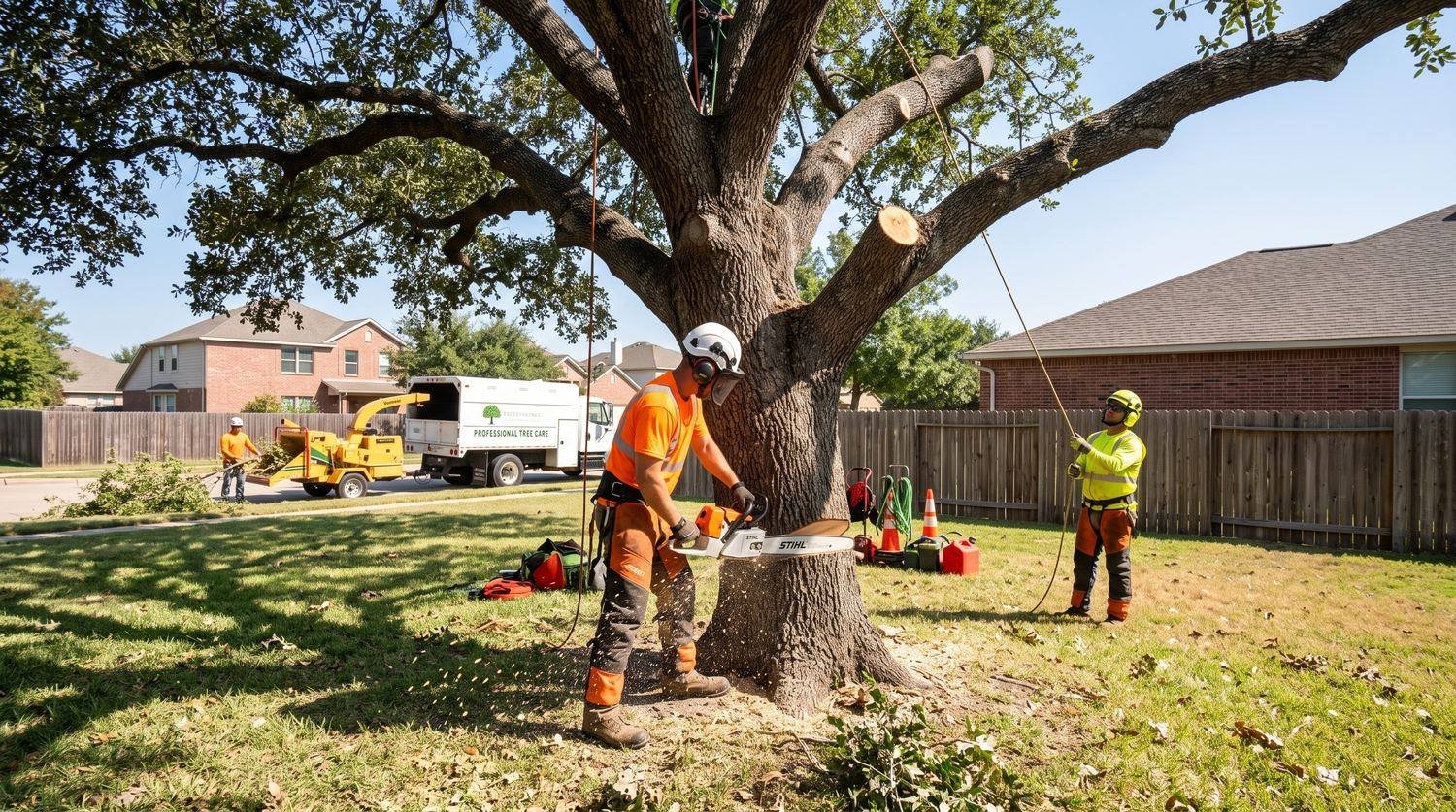
There is no true cedar native to Texas. The tree everyone calls cedar is a juniper, and two of them matter here. Ashe juniper is the mountain cedar of the Edwards Plateau, listed by Texas A&M AgriLife as blueberry juniper for its blue fruit. Redberry juniper dominates western Texas and the Rolling Plains, named for its reddish to copper brown fruit. You can run into either in this part of the Big Country.
Why the species matters more than the name
One difference decides how much work a removal really is. AgriLife’s juniper ecology work states that redberry juniper resprouts profusely if the plant above the bud zone is killed or damaged by fire, hand cutting or shredding, and calls that habit the reason it is one of the most difficult shrubs in Texas to control. Ashe juniper does the opposite. It does not sprout from the base when topkilled.
Get a Free Cedar Removal Quote
Send a photo of the tree or the fence line, close enough to show the fruit color. That tells us which juniper we are dealing with.
- Free, no-obligation estimate
- Single yard cedars or fence line clearing
- Brush chipped and hauled, area raked clean
- Stumps ground on the same visit if you want them out
Your request goes to an independent local tree service, which contacts you with a quote. Big Country Tree Pros does not do the tree work itself.
Multi Stemmed, and What That Changes
AgriLife describes Ashe juniper as typically multistemmed with a broadly globular form branching near the base, and redberry juniper as several stems rising from the base to form a dense clump. Neither is a tree with one trunk you notch and drop.
In practice the stems come off one at a time, usually from the outside in, and only the last behaves like a normal trunk. Foliage runs right down to the ground, so you cannot see what you are cutting into until you open it up. Beside a fence, a shed or a propane tank that is slow, careful work.
The other surprise is volume. A cedar makes a far bigger brush pile than its height suggests, because the foliage is dense the whole way down. A ten foot cedar can fill more chipper space than a taller hackberry.
Resin, Sparks and Fire
Juniper heartwood is dense and carries a concentration of oil that acts as a natural preservative. AgriLife notes Ashe juniper heartwood can weather the elements for up to about thirty years, which is why juniper is harvested commercially for fence posts and juniper oil. The same oil makes it messy to cut. Chains gum up with resin, and cut cedar coats everything nearby in pitch and dust.
It is a poor fireplace wood. AgriLife states plainly that neither juniper species is considered commercially valuable for firewood because the wood tends to produce many sparks. Texas A&M Forest Service also notes that oil, resin and wax in leaves and branches increase a plant’s flammability, worth thinking about for a dense cedar grown tight against a wall or under an eave going into a dry summer.
Water and Cedar Fever
Two reasons people give for clearing cedar. Both are partly right.
Water. Juniper intercepts a large share of rainfall before it reaches the ground. AgriLife research on the Edwards Plateau measured roughly 20 percent of annual rainfall reaching mineral soil under an Ashe juniper canopy and about 34 percent under redberry juniper, against roughly 82 to 89 percent in grassland, and notes juniper’s root system keeps pulling soil water long after grasses have gone into drought. The caveat is that water hitting the ground is not the same as water in a tank. The same authors write that how much extra water brush control could make available is still unanswered for many rangelands, and that on shallow soils or steeper slopes much of it runs off. Clearing cedar is a defensible range decision, not a guaranteed water supply.
Cedar fever. Texas A&M Forest Service describes cedar fever as an allergic reaction to pollen from mountain cedar, predominantly Ashe juniper in Texas, with pollination between December and January. A cold front can open every pollen cone on a tree at once, and the pollen blows for miles, which is why people nowhere near a juniper still get it. Taking the cedars out of your own yard is worth doing for other reasons. It will not settle your December symptoms.
Yard Tree or Fence Line
| The job | What it involves |
|---|---|
| Ornamental cedar in a yard | Stems taken in roped sections where something sits underneath, then the stump ground out |
| Fence line or a few acres | Access and haul volume rather than rigging. Species decides whether cut stumps need a follow up |
What moves the price
- Number of stems and their diameter at the base, which matters more than height
- Brush volume, which runs high on cedar for the size of the tree
- What sits under it, since a roof or fence means roping pieces down
- Access for a truck and chipper, and how far material is carried
- Whether stumps are ground out or cut low and left
- On acreage, the density of the stand and how much is coming out
Stumps are quoted separately and are cheapest ground during the same visit, covered on the stump grinding page. Brush is chipped and hauled and the area raked before the crew leaves. Handling debris yourself? The tree debris disposal page covers local options, and brush limits change, so confirm current rules with the City of Abilene. Towns we cover are on the service areas page.
Cedar and Juniper Questions
Is cedar the same thing as juniper?
In Texas, yes. There is no true cedar native to the state. What people call cedar is Ashe juniper or redberry juniper, and both turn up around Abilene.
Will a cedar grow back if I cut it off at the ground?
It depends on the species. Redberry juniper resprouts profusely from the base after the top is removed. Ashe juniper does not sprout from the base once topkilled, so a low cut usually finishes it.
Will clearing the cedar in my yard help my cedar fever?
Not really. Cedar pollen is wind carried for miles, and one cold front can open every pollen cone on a tree at once. Removing your own trees is worth doing for other reasons.
Does clearing cedar give me more water?
Sometimes, and less reliably than people expect. Juniper does intercept most of the rain falling on it, but whether that turns into usable water depends on soil depth, slope and grass cover.
Can I burn cedar in my fireplace?
Better not to. AgriLife notes juniper is not valued as firewood because the resinous wood throws a lot of sparks. It is better used for fence posts.
Can you clear a fence line rather than single trees?
Yes. Fence line and acreage work is quoted by area and density rather than per tree, and turns on access and haul volume more than rigging. Send a photo down the line.
Ready for a free quote?
Takes about a minute. No obligation, no pressure.