
Tree Trimming in Abilene, TX
Deadwood out, clearance off the roof and driveway, and every cut made where the tree can seal it.
What Pruning Is Actually For
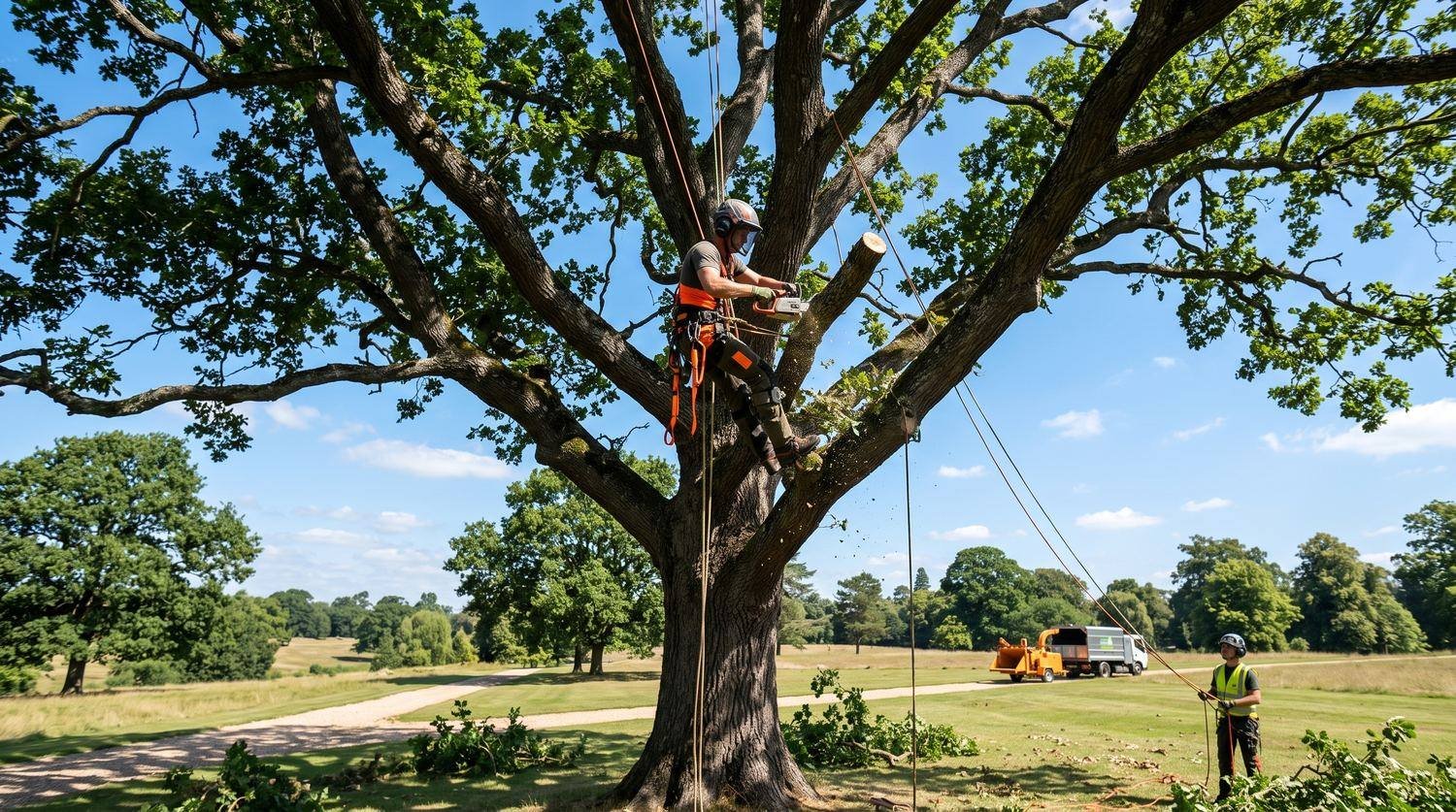
Tree trimming in Abilene, TX has two jobs. Keep the tree out of places it does not belong, and keep the tree itself sound. Cuts that do neither should not be made.
Trees here live hard. Long drought, shallow clay over rock, hail, and southwest wind. An untouched canopy piles weight on the ends of long limbs and grows into whatever is above it. Pruning keeps a tree from becoming a removal ten years early.
Five reasons to prune
- Structure. Twin leaders and tight V unions fail later. Small cuts fix that while the tree is young
- Deadwood. Dry summers left gray limbs all over town, and dead wood comes down eventually
- Clearance. Limbs grind shingles in every wind, hang low over the driveway, and crowd the service drop to the house
- Storm resistance. Thinning lets wind pass through instead of pushing. Lion tailing, which strips the interior, does the opposite
- Health. Cutting out limbs that cross and rub helps, but pruning does not feed a tree. In a drought year, water matters more
Signs your tree needs a trim
- Limbs resting on the roof or scraping siding when it blows
- Trash trucks clipping limbs over the driveway or alley
- Gray, bare limbs visible from the ground in mid summer
- Skinny vertical shoots where someone topped the tree years ago
Get a Free Tree Trimming Quote
Tell us which tree and what is bothering you about it. A photo taken far enough back to show the whole canopy tells us most of what we need.
- Free, no-obligation estimate
- Quotes from an independent local tree service
- Brush chipped and hauled off, area raked clean
- Proper cuts only, no topping
Your request goes to an independent local tree service, which contacts you with a quote. Big Country Tree Pros does not do the tree work itself.
Thinning, Raising, Reduction and Deadwooding
Most tree trimming is one of four operations, or a mix of them. Knowing the words makes it easier to say what you want done.
| Type of pruning | What it means |
|---|---|
| Crown thinning | Small cuts spread through the canopy so light and wind pass through, never one side stripped or the middle gutted |
| Crown raising | Taking the lowest limbs for clearance over a drive or walk. Raise gradually, since low branches build trunk |
| Crown reduction | Shortening limbs to lower height or pull weight off a structure, cutting back to a living lateral big enough to take over |
| Deadwooding | Removing only dead and broken wood. Nothing living comes off, so it works in any season |
What a correct cut looks like
Every limb meets the trunk at a slightly swollen ring called the branch collar, and that collar is how a tree seals a wound. Cut just outside it and the tree closes from the edges in. Cut flush and the collar goes with the limb. Leave a stub and it dies back and rots. Heavy limbs come off in three cuts so the bark does not peel down the trunk when the weight drops.
Why topping damages a tree
Topping means cutting limbs back to stubs with no regard for where a lateral sits. A stub has no collar, so it cannot seal, and decay works down into the trunk. The tree answers with dozens of weakly attached shoots below each cut, and in a few years the canopy is taller and denser than before, standing on rotting stubs. Bark that spent decades shaded gets sunscalded in full West Texas sun. The tree ends up more hazardous, not less. When one truly is too big for its spot, the options are staged reduction or removal and replanting.
The Best Time to Prune in West Texas
For most species around Abilene, the dormant window from late December into February is best. Structure is visible, wounds close fast once growth resumes, and insect pressure is low.
| Season | What is appropriate |
|---|---|
| Late December to early February | Best window for structural work, thinning and reduction |
| February through June | No pruning of red oaks or live oaks except emergencies |
| July and August | Light clearance and deadwood. Heavy cuts in this heat invite sunscald |
| September to early November | Avoid heavy pruning that pushes tender growth before a freeze |
| Any time | Broken and hanging limbs, which do not wait for a season |
Species Notes for Abilene Yards
Oaks, cedar elm and pecan
Live oaks hold their leaves through winter, which makes people assume they cannot be pruned in the dormant season. They can, and that is when they should be. Red oaks carry more deadwood and are more brittle in wind. Cedar elm takes our clay and drought as well as anything, but it sets tight unions worth fixing while the tree is small. Pecan wood breaks before it bends, so the work there is end weight reduction, deadwood and roof clearance, never gutting the interior.
Mesquite and hackberry
Mesquite sprouts back from any cut, so pick two or three stems early and stay after the base suckers. Hackberry grows fast, decays fast and drops limbs, so a mature one near the house earns regular deadwood work.
Crape myrtle
Cutting every stem back to the same knuckles each winter has a nickname for a reason. It does not increase bloom in any meaningful way. It forces whippy shoots from each knob that bend to the ground the first time the flowers get wet, and the knuckles swell into clubs while the plant loses the smooth trunks that are the best thing about it. Correct pruning is quick work in late winter. Pull the base suckers, thin crossing twigs, and lift the lower branches slightly each year.
Yards in Wylie, Tye, Clyde, Baird, Buffalo Gap and Merkel get the same treatment, usually with better equipment access than an in town backyard.
How Often Trees Need Trimming
- Young trees: light structural pruning every two to three years, while the cuts are small
- Mature oak, elm and pecan: a maintenance pass every three to five years
- Crape myrtles and small ornamentals: a light touch each late winter
- Deadwood and roof clearance: whenever you can see it needs doing
A tree that needs heavy work every year is either being pruned wrong or was planted in the wrong spot.
What Affects the Price of Tree Trimming
Nobody can quote pruning honestly without seeing the tree, but the same factors move the number every time.
- Size and species. A crape myrtle and a sixty foot pecan are not the same afternoon
- How much is coming off. A deadwood pass is quicker than restoring a neglected canopy
- What is underneath. Open lawn lets brush drop. A roof, pool or flower bed means limbs get roped down
- Access for the chipper. Backyard only access means carrying every piece out by hand
- Power lines. Work near the service drop is slower and may need utility coordination
What the price includes
- The pruning itself, cut to the branch collar
- Brush chipped and hauled off the property
- The work area raked and blown clean
- No climbing spikes on a tree that is staying, since spikes wound the trunk
Stump grinding and removals are quoted separately. If a tree is too far gone for pruning to fix, we will say so rather than sell a trim that postpones the problem. Storm broken limbs are covered on the storm cleanup page, and general questions on our FAQ page.
Tree Trimming Questions
When is the best time to trim trees in Abilene?
Late December through early February for most species. Structure is easy to read with the leaves off and wounds close fast once growth starts. Dead limbs can come out any time.
Can you prune my oak in the spring?
Not unless it is an emergency. Red oaks and live oaks should not be pruned in Texas from February through June, because sap feeding beetles spread oak wilt to fresh wounds. Storm cuts then get painted right away.
Do you top trees?
No. Topping leaves stubs that cannot seal and grows back as weakly attached shoots. If a tree needs to be smaller we reduce it to living laterals instead.
How much can be taken off at one time?
About a quarter of the live canopy in one season on a healthy mature tree, less on an older or stressed one. Deadwood does not count toward that.
Will trimming keep limbs off my roof for good?
It buys several years, not forever. Hackberry and Arizona ash come back sooner than oaks, so we cut clearance with the next few seasons in mind.
Do you haul the brush away?
Yes, on every trimming job, and the area gets raked and blown clean. If you want the chips for mulch, we will leave them where you want them.
Ready for a free quote?
Takes about a minute. No obligation, no pressure.