
Oak Wilt and Oak Pruning Timing in Abilene, TX
A real disease with a real calendar. We do not diagnose it and we do not treat it. We do the removal, and pruning at a time of year that does not invite it.
We Do Not Diagnose Oak Wilt and We Do Not Treat It
Big Country Tree Pros is a tree service. Oak wilt is a fungal disease, and calling it from a photo is not something we will pretend to do. Texas A&M AgriLife Extension recommends laboratory isolation of the fungus to confirm the diagnosis, and says a trained expert should be consulted when in doubt. That means a certified arborist, your county Extension office, or Texas A&M Forest Service.
Treatment is the same answer. Fungicide injection of high value oaks is specialist work, and AgriLife’s guidance is to consult a trained and licensed arborist holding a certified applicator’s licence. We do not inject trees and we cannot cure one.
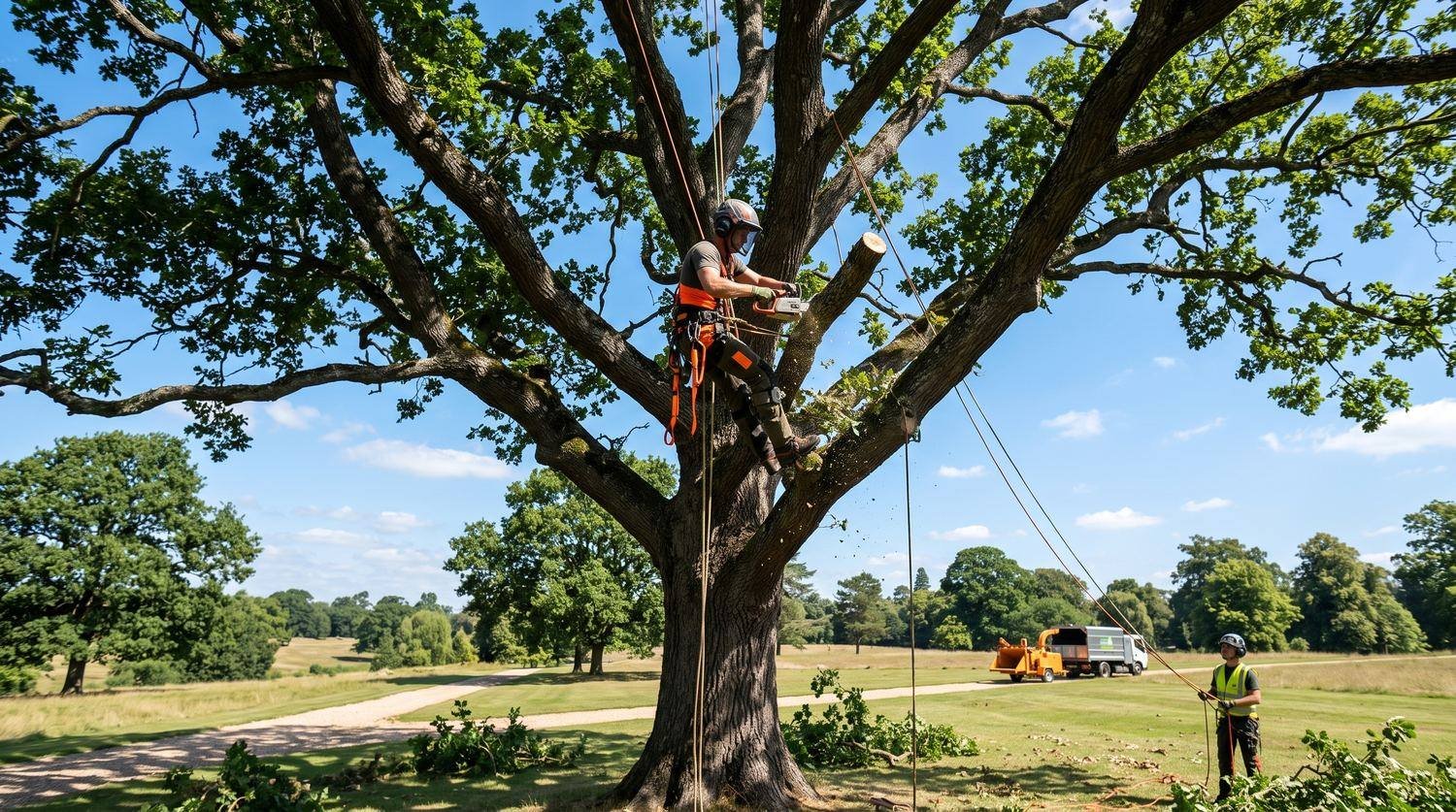
What we do is narrower. The tree crew takes down oaks that are dead or hazardous, handles the wood, and prunes when Texas guidance says it is safe, with cuts at the branch collar and painted.
Get a Free Quote on Oak Work
Tell us which oak and what you want done. Pruning goes in the right part of the calendar.
- Free, no-obligation estimate
- Oak pruning kept outside the February to June window
- Every oak cut painted immediately
- Brush chipped and hauled, area raked clean
Your request goes to an independent local tree service, which contacts you with a quote. Big Country Tree Pros does not do the tree work itself.
How Oak Wilt Moves Between Trees
Through connected roots. AgriLife describes live oaks as growing from root sprouts and forming vast interconnected root systems, which is why they are the worst affected oak in Texas despite only mid range susceptibility. Infection centers among live oaks expand about 75 feet a year. A row of live oaks on a fence line is effectively one plant.
On beetles. The fungus grows mats under the bark of red oaks it has killed. Sap feeding nitidulid beetles feed on those mats, pick up spores and carry them to fresh wounds on other oaks. That is the whole mechanism, and it is why a cut made in the wrong month is a doorway. Mats form only on red oaks.
| Group | What the guidance says |
|---|---|
| Red oaks: Spanish, Shumard, blackjack | Most susceptible, often dying three to four weeks after symptoms. The only group that grows spore mats |
| Live oaks | Intermediate, but worst affected in practice because of grafted roots. Most die over one to six months |
| White oaks: post, bur, chinkapin | Resistant, and they rarely die from oak wilt. Not immune, though |
What it looks like
On live oaks the signature is veinal necrosis: leaf veins go chlorotic, meaning yellow, then necrotic, meaning brown, while tissue between them can still look green. On red oaks, young leaves wilt to pale green and brown, and mature leaves show dark green water soaked areas or fade to bronze from the margins inward. Defoliation spreading outward from one point in a group of oaks is the other pattern.
The Pruning Window, and Why It Is the Point
AgriLife Extension states it in one sentence: all wounding of oaks, including pruning, should be avoided from February through June. Texas A&M Forest Service gives the same window. That is when the beetles are moving and a fresh cut is most likely to be found. The least hazardous periods, in AgriLife’s wording, are the coldest days in midwinter and extended hot periods in mid to late summer, so oak work here goes at the cold end of winter.
Paint every oak wound immediately, in any season. AgriLife says pruning cuts and other wounds, including freshly cut stumps and damaged surface roots, should be treated at once with a wound or latex paint. Storm damage does not wait for July either. A limb torn out in April is already an open wound, so it gets cut back properly and painted the same visit, which is on the storm cleanup page.
When the Oak Has Already Died
This is the part we can help with. Texas A&M Forest Service says infected red oaks that have died should be cut down and burned, buried or chipped soon after discovery. texasoakwilt.org adds: dispose of diseased red oaks immediately, never store unseasoned oak wood from infected trees near healthy oaks, and burn all firewood before spring. Unseasoned wood of unknown origin that has to sit should be covered with clear plastic, edges buried, so beetles cannot leave the pile. Live oak and white oak wood is different, since mats do not form on those. We are usually glad to leave rounds stacked on a job, but on a red oak you suspect died of oak wilt, hauling it off is the safer default.
The takedown itself is ordinary work. It comes apart in sections where something sits underneath, brush is chipped and the ground raked clean. A tree standing dead a season or two is brittle, covered on the dead tree removal page. Stumps are quoted separately and cheapest ground on the same visit, on the stump grinding page, and a fresh stump gets painted like any oak wound. Price tracks size, what is underneath, access, and whether the wood leaves the property.
Handling debris yourself? Options are on the tree debris disposal page. Brush limits and pickup schedules change, so confirm current rules with the City of Abilene. Towns we cover are on the service areas page.
Oak Wilt Questions
Can you tell me whether my oak has oak wilt?
No. AgriLife Extension recommends laboratory isolation of the fungus to confirm it. Start with a certified arborist, your county Extension office or Texas A&M Forest Service.
When can I prune an oak in Abilene?
Not from February through June. All wounding of oaks, pruning included, should be avoided in that window. The least hazardous periods are the coldest days in midwinter and extended hot spells in mid to late summer.
Do I really need to paint the cut?
On oaks, yes. Treat all pruning cuts and other wounds immediately with a wound or latex paint, including fresh stumps and surface roots, regardless of season.
Which oaks are most likely to die from it?
Red oaks such as Spanish, Shumard and blackjack, often within three to four weeks of symptoms. Live oaks are intermediate but suffer most because grafted roots pass it along. White oaks such as post, bur and chinkapin are resistant.
What does it look like on a live oak?
Veinal necrosis. Leaf veins turn yellow and then brown while tissue between them may still be green.
Can I keep the firewood from an oak that died?
It depends what it was. Mats form only on red oaks. Guidance for diseased red oak is to dispose of it right away, burn firewood before spring, and never store unseasoned wood near healthy oaks.
Ready for a free quote?
Takes about a minute. No obligation, no pressure.